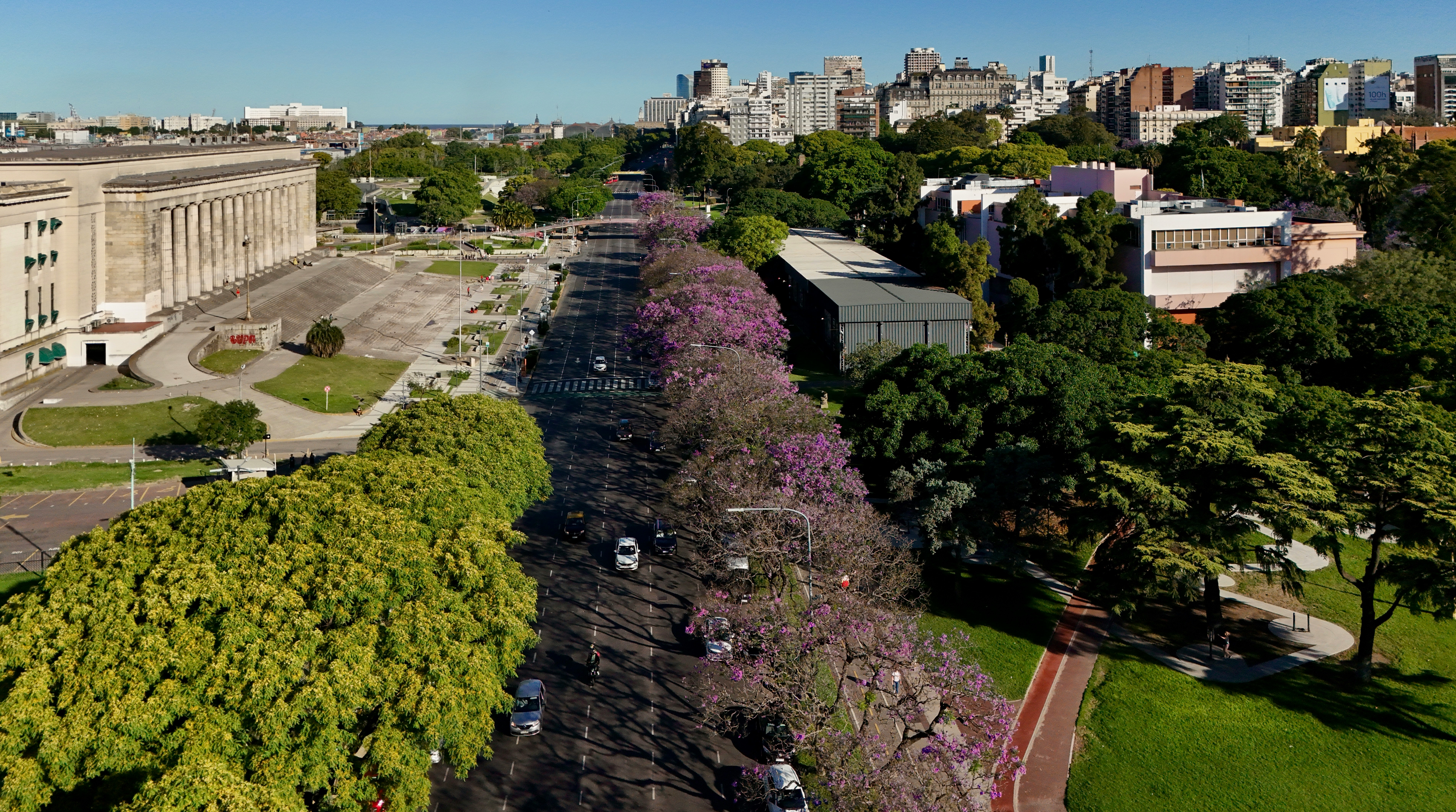
For a growing number of foreign investors, Argentina is a place to live and work. The reasons vary, a spouse from Buenos Aires, a taste for wine country in Mendoza, the pull of Patagonian landscapes, a desire to spend part of the year in the same time zone as U.S. capital markets while enjoying a materially lower cost of living, or the simple recognition that the deepest investment insights emerge from ground-level presence. Yet the practical realities of moving to Argentina, particularly for someone who intends to remain economically active, are more consequential than casual visitors often realize. This report explains the immigration options available to foreign residents; the tax implications of becoming an Argentine tax resident (which are potentially significant, given the country’s worldwide-income and wealth-tax rules); the interaction between residency status and investment structuring; and the practical adjustments an investor should anticipate. It is not a lifestyle article. It is a briefing for the reader considering, or already committed to, spending meaningful time in Argentina while continuing to manage international capital.
Immigration Architecture: Three Categories, Different Purposes
Argentine law recognizes three main residence categories: transitory, temporary and permanent. A person applying for residence may also receive a provisional permit, known as a residencia precaria, while the application is being reviewed. This permit is generally valid for up to 90 days and may be renewed. It allows the holder to remain in Argentina, travel, work and study, although time spent under a precaria does not count towards permanent residence or citizenship.
Transitory residence covers short stays for a specific purpose. Investors and business visitors can usually obtain permission to remain for up to two months, with an extension available in some cases. Separate permits exist for technical and professional activities. Transitory residents do not receive an Argentine DNI and may only work when their particular immigration status allows it. This category is useful for investors visiting Argentina to attend meetings, review projects or explore opportunities without moving to the country.
Temporary residence is intended for longer stays and may be granted for up to three years, depending on the category. Available routes include employment, investment, income from foreign assets, retirement income, study, family reunification and Mercosur nationality. Temporary residents can obtain an Argentine DNI and may work according to the terms of their residence.
Applications may be started in Argentina or from abroad. The documents and procedures depend on the category. An Argentine sponsor registered with RENURE is normally required when the application is based on employment or an activity hosted by a local organization. It is not a general requirement for every temporary residence application. Investors, rentistas and Mercosur nationals apply under different criteria.
For investors planning to spend a significant part of the year in Argentina, temporary residence is usually the practical starting point. It provides a formal immigration status, access to a temporary DNI and a basis for remaining in the country beyond the limits of a short-term visit.
Permanent residence has no expiry date and allows the holder to live and work in Argentina indefinitely. It may be available through qualifying family relationships or after a period of temporary residence. The usual requirement is two years of temporary residence for Mercosur nationals and three years for other nationalities. Applicants must also show sufficient means of support and meet the applicable criminal-record requirements.
Brazilian nationals benefit from a separate bilateral agreement. Subject to the required documentation, they may request permanent residence without completing the usual two-year period that applies to other Mercosur nationals.
Investment is a category of temporary residence. An investor who contributes personal assets to an activity considered beneficial to Argentina may receive temporary residence for up to three years, with the possibility of renewal. The investment category does not by itself provide a direct route to permanent residence. An investor seeking permanent status must qualify under the rules that apply at the time of the application.
A separate citizenship-by-investment route was introduced in 2025. It allows a foreign national to apply for Argentine citizenship without completing a minimum residence period if the applicant has made an investment considered relevant by the government. The Ministry of Economy determines which investments qualify, while the Citizenship by Investment Programs Agency evaluates the application before a decision is made by the National Directorate of Migration. The qualifying investment and procedure should be reviewed carefully before relying on this route.
Foreign residents may otherwise apply for Argentine citizenship after two years of continuous and legal residence. Permanent residence is not required, so time held under a valid temporary residence may qualify. Under the current law, the applicant must remain in Argentina throughout the entire two-year period without travelling abroad. Applications are handled by the National Directorate of Migration rather than filed before a civil court.
Argentina does not generally require a person to renounce another nationality when becoming Argentine. Whether the applicant can retain the original nationality will also depend on the law of that country.
Nationals of eligible Mercosur member and associated countries may obtain a two-year temporary residence based on nationality, without relying on employment or a local sponsor. The current list includes Uruguay, Brazil, Paraguay, Bolivia, Chile, Peru, Ecuador, Colombia, Venezuela, Guyana and Suriname. Some naturalized citizens of these countries may also qualify, subject to additional conditions.
Rules for short business visits depend on the traveller’s nationality and the activity planned in Argentina. Some visitors may enter without obtaining a visa in advance, while others must apply through an Argentine consulate and may need an invitation from an organization registered with RENURE. These short-stay permissions do not create residence rights and should not be treated as a substitute for temporary residence.
Tax residency: the key threshold
For investors planning to spend significant time in Argentina, tax residency should be considered before the move. Argentine tax residents are generally taxed on income earned in Argentina and abroad. Non-residents are taxed only on Argentine-source income. A similar distinction applies to the personal assets tax: residents are generally assessed on taxable assets held worldwide, while non-residents are assessed only on assets located in Argentina.
Tax residency is governed by specific rules. A foreign national generally becomes an Argentine tax resident after obtaining permanent immigration residence or after remaining in the country for 12 months under temporary residence permits. Short trips abroad do not necessarily interrupt that period. Residency takes effect on the first day of the month following the grant of permanent residence or the completion of the 12-month period. Special rules may apply to foreign employees on temporary assignments and to students.
Once tax residency begins, worldwide income falls within the Argentine income-tax system. Ordinary net income is subject to progressive rates ranging from 5 to 35 per cent, with the income brackets adjusted every six months. Some dividends, investment returns and capital gains are subject to separate rules, rates or exemptions. Foreign income taxes may generally be credited against the Argentine tax attributable to the same foreign income, although the credit cannot exceed that Argentine liability.
The personal assets tax is calculated on assets held on December 31 each year. Under the rules currently in force, residents are taxed on taxable assets in Argentina and abroad once the applicable exemption is exceeded. The rates scheduled for the 2026 tax year range from 0.5 to 0.75 per cent. From the 2027 tax year, the law provides for a single rate of 0.25 per cent on taxable assets above the exemption threshold. A limited credit may be available for comparable wealth taxes paid abroad.
The effect can be substantial for someone with a large international portfolio. An investor who remains a non-resident may have limited exposure to Argentine assets and income. Once that person becomes resident, foreign securities, bank accounts, company interests and other investments may enter the Argentine tax calculation.
Argentina currently has double-taxation treaties in force with 24 countries, including Germany, Spain, the United Kingdom, Italy, Switzerland, China and several others. These treaties may contain rules for resolving dual residence and allocating taxing rights, although the result depends on the terms of the treaty and the type of income or asset involved. The United States is not included in Argentina’s current treaty network. US citizens living in Argentina generally remain subject to US tax on worldwide income and must coordinate the domestic foreign-tax-credit rules of both countries.
Relocation should therefore be planned before tax residency begins. Existing trusts, holding companies, insurance arrangements and family investment vehicles should be reviewed individually. Their treatment depends on factors such as ownership, control, the rights retained by the investor, the type of income involved and the country in which the entity is established. Argentine law can attribute the income of some foreign entities, funds and trust-like arrangements directly to an Argentine resident, even when the income has not been distributed. Setting up a structure before moving does not, by itself, place it outside the Argentine tax system.
For investors with significant international assets, the timing of the move and the review of existing holdings are central parts of the relocation process. Advice should be obtained in both Argentina and the investor’s current country of residence before any change is made.
Structuring investments around tax residency
An investment structure should be reviewed when the owner’s tax residency changes. Immigration residence and tax residence are related, but they are not the same. A foreign national generally becomes an Argentine tax resident after obtaining permanent residence or spending 12 months in the country under temporary residence permits, subject to limited exceptions. From that point, Argentina generally taxes income from Argentina and abroad. The personal assets tax may also extend to assets held outside the country.
A non-resident is generally taxed only on Argentine-source income. Payments to foreign beneficiaries are often subject to final withholding in Argentina. The effective rate depends on the type of income, the parties involved, any available exemption and the terms of an applicable tax treaty. Argentine law commonly calculates the withholding by applying a 35 per cent rate to a presumed net profit, which varies by category. For this reason, there is no general 4.9 per cent rate that can be used for interest income.
Non-residents may also face personal assets tax on property and investments located in Argentina. Depending on the asset, the tax may be paid through an Argentine representative, company or other local party acting as a substitute taxpayer. No Argentine tax generally applies to income or assets located abroad while the investor remains a non-resident.
The position changes once the investor becomes an Argentine tax resident. Foreign rental income, dividends, interest and investment gains may then have to be reported in Argentina. Holding these assets through a foreign company, trust or similar arrangement does not necessarily reduce the tax. Argentine rules can attribute the income of certain controlled trusts and foreign entities directly to the resident owner, including in some cases before the income has been distributed.
The period before tax residency begins is therefore an important time for reviewing the portfolio. There is no general rule that exempts assets because they were acquired before the owner became resident, nor is there an automatic revaluation of those assets when residency begins. The tax cost is determined under the rules that apply to each type of asset. Selling and repurchasing an investment may alter its cost basis, but it may also trigger tax in another country and should not be undertaken without a full calculation.
The ownership of Argentine investments also requires careful analysis. Holding real estate personally may expose the investor to income tax, personal assets tax and local property charges. Using an Argentine company changes the way the income and the asset are taxed, but it does not remove the tax burden. Argentine companies pay corporate income tax under progressive rates of 25, 30 and 35 per cent, with the brackets adjusted annually. Dividends are generally subject to a further 7 per cent tax. Shares in an Argentine company may also remain within the personal assets tax system, with the company responsible for paying the tax on behalf of its shareholders.
The appropriate vehicle depends on the assets involved, expected income, length of ownership, financing arrangements and the investor’s tax position in other countries. The comparison may include personal ownership, an Argentine company, a foreign company or an existing trust, but none should be assumed to be more efficient without reviewing the full facts.
Investors planning to become Argentine tax residents should review their holdings before residency begins. Argentine advice should be coordinated with advice in the investor’s current country of residence, particularly where a restructuring, sale or transfer of assets is being considered.
The family dimension
Investors relocating to Argentina frequently do so with family members whose situations require separate attention. Spouses and dependent children generally qualify for derivative residency permits on the basis of the primary applicant’s status. The mechanics involve the same document requirements birth and marriage certificates, criminal-record certificates for family members over the age of sixteen but the sponsoring vehicle and the underlying application category can accommodate the family unit.
For children, education is a significant consideration. Argentina has a substantial system of both public and private schools, and the major cities offer a range of international schools that follow curricula from the United States, France, Germany, Italy, Britain, and other countries. Selection of an appropriate school is often the first major post-relocation decision families make, and it may effectively determine the neighborhood in which the family settles.
For spouses who are also economically active, Argentine work authorization is available to residents at both the temporary and permanent levels. The interaction between the spouse’s professional activity and the family’s overall tax profile should be analyzed alongside the primary investor’s activity.
For extended family parents or adult children the derivative-residency rules are more limited. Argentine law does not automatically extend residency rights to non-dependent adult relatives. Where family reunification is a consideration, separate applications on independent grounds are typically required.
For inheritance planning, the fact that residence in Argentina brings the resident’s worldwide estate within the analytical scope of Argentine tax authorities requires attention. Argentina has no general inheritance tax at the federal level, though the province of Buenos Aires historically has imposed one, and other provinces have periodically considered similar levies. The interaction between Argentine succession law, which applies its own principles to property located in Argentina and to residents’ estates generally, and the succession laws of the investor’s home country requires expert coordination particularly for investors with complex international holdings or beneficiaries in multiple jurisdictions.
Banking, currency, and everyday finance
The practical logistics of managing finances as a resident are meaningfully different from those of a visiting investor. Foreign residents can open Argentine bank accounts once they hold a resident identification number (DNI), which is generally issued upon approval of the temporary or permanent residency application. These accounts can be denominated in Argentine pesos or, subject to prevailing regulations, in dollars.
The Argentine banking system is functional and technologically modern in many respects, but it operates under the constant pressure of foreign-exchange regulations that constrain the movement of currency across borders. For a resident who receives income in dollars from foreign sources and wishes to spend in pesos in Argentina, the mechanisms available for conversion are well-understood but subject to change. Blue-chip swap transactions through the securities market have been one common route; direct conversion at the official rate is another, though the two rates can differ materially. Investors with significant recurring dollar income should plan their conversion strategy in advance and adjust as regulations evolve.
Payment infrastructure has developed substantially. Digital wallets and interoperable payment platforms, subject to the regulatory framework governing Payment Service Providers (PSPs), have made electronic payments efficient and widespread. Credit cards issued by Argentine banks operate similarly to those in other jurisdictions, though with cash-advance and international-transaction rules that reflect the underlying foreign-exchange framework.
Currency choice for everyday transactions varies by category. Rental payments, tuition fees, medical services, and many high-value goods are frequently priced or paid in dollars. Groceries, transportation, and most consumer services are priced in pesos and paid electronically or in cash. Adjusting to the everyday multi-currency reality of Argentine life is one of the routine adaptations that new residents make.
Quality of life considerations
An honest assessment of relocation must address the daily texture of life. The document from which this analysis draws does not treat these questions directly, but any investor considering a move should factor them in.
Buenos Aires is one of the great cities of the Americas, with a European architectural character, a deep cultural life, and a significant international expatriate community. It is comparable in cost of living to major U.S. or European cities for premium services but materially cheaper for most everyday goods. Its neighborhoods vary substantially in character, from the professional and diplomatic zones of Palermo and Recoleta to the historical center around San Telmo and the modern developments of Puerto Madero.
Beyond Buenos Aires, Argentina offers a range of settings. Mendoza, at the foot of the Andes, is the wine country; Bariloche and other Patagonian locations offer mountain and lake scenery of exceptional beauty. Córdoba is the country’s second-largest metropolitan area, with a distinct cultural identity and a growing technology sector. Rosario, on the Paraná River, is an important commercial and industrial center. For investors whose economic activity does not require presence in Buenos Aires, these secondary cities can offer meaningful advantages in cost of living, quality of life, and access to specific sectoral activities.
Healthcare in Argentina is delivered through a mix of public, social-security, and private systems. Private health insurance, purchased individually or through employer arrangements, provides access to a network of well-regarded hospitals and clinics. The quality of care in the major private institutions is high, and many physicians have received training in the United States or Europe. Costs are substantially lower than in the United States and comparable to those in Western Europe.
Security conditions vary by location and neighborhood, and investors should conduct honest inquiry about the specific area they are considering. Buenos Aires as a whole is not among the more dangerous large cities in Latin America, but urban crime exists and property crime is a concern that residents adapt to.
Language is a practical consideration. Spanish is the operating language of business, government, and daily life. Argentine Spanish has its own characteristics the voseo second-person form, distinct pronunciation, and Italian-influenced idioms that even fluent Latin-American Spanish speakers may take time to fully adapt to. English is widely spoken in business, professional-services, and hospitality environments, but for a resident who intends to engage with Argentine society beyond expatriate circles, Spanish fluency is essential.
The role of local professionals
An observation that applies with unusual force to Argentine relocation and investment: the quality of one’s local professional advisers is often the single most important determinant of whether the experience is successful or frustrating. Argentina has a well-developed legal, accounting, tax-advisory, and notarial infrastructure. The top firms in each of these categories are internationally competitive, and the professionals within them are typically fluent in English and experienced with cross-border matters.
But Argentine practice is also marked by significant informational asymmetries. Regulations change frequently, particularly in foreign-exchange, tax, and administrative-law areas. Rules that appear straightforward on paper are often applied differently in practice by different authorities. Documentation requirements vary between jurisdictions. What is possible in one province may not be possible in another, and what is possible today may not be possible tomorrow.
For the relocating investor, engaging serious professional advisers early is not a matter of caution but of basic economic rationality. The cost of good advice is negligible compared to the cost of a poorly structured residency, a mismanaged tax transition, or an improperly documented investment. The Argentine market has produced firms and individuals capable of providing that advice at international quality standards; the investor’s task is to identify them and to build a working relationship that can extend across the years of eventual residence.
Conclusion
Relocating to Argentina requires investors to consider both their personal plans and their financial position. The amount of time they expect to spend in the country may affect their immigration status, tax residency and investment holdings. Family needs, housing, healthcare and day-to-day costs should be considered at the same stage.
Good planning begins with a clear idea of what the investor intends to do in Argentina. Someone making occasional visits will face different questions from someone planning to live in the country, manage a local business or remain for several years. Immigration, tax and investment advice should reflect those plans.
Argentina can offer investors a high quality of life, access to experienced professionals and opportunities across several sectors. It can also involve complex rules, economic volatility and administrative delays. Understanding these conditions before moving can prevent unnecessary costs and make the transition easier.
This report provides a general overview rather than advice for a particular case. Before relocating, investors should speak with qualified immigration, tax and financial advisers in Argentina and in any other country where they hold assets or remain subject to tax. The earlier those conversations take place, the easier it is to make informed decisions about residency, investment structures and the move itself.